

Introduction
So you want to learn to surf in Morocco? You’ve made an excellent choice. Morocco has become one of the world’s most popular destinations for beginner surfers – and for good reason.
With consistent waves, warm weather, affordable prices, and a thriving surf camp culture, Morocco offers everything a first-time surfer could want. Plus, it’s just a short flight from Europe, making it perfect for a week-long surf adventure without the jet lag.
In this comprehensive beginner surfing Morocco guide, we’ll cover everything you need to know – from the best spots for learning to what to expect in your first lesson, and how to choose the right surf camp. Let’s dive in!
Why Morocco is Perfect for Learning to Surf
-
1
Perfect Learning Waves
Morocco’s Atlantic coast offers gentle, slow-breaking waves that are ideal for building confidence. Spots like Banana Point and Panorama Beach have soft, sandy bottoms where you can practice without worrying about reef or rocks.
-
2
Year-Round Sunshine
With over 300 days of sun per year, you won’t have your surf trip ruined by bad weather. Even in winter, temperatures hover around 20°C – much warmer than European surf destinations.
-
3
Affordable Surf Camps
Morocco offers incredible value. All-inclusive surf packages with accommodation, meals, and lessons cost a fraction of what you’d pay in Portugal, France, or Bali.
-
4
Experienced Local Instructors
The Taghazout area has a mature surf scene with experienced, certified instructors who’ve taught thousands of beginners. Many local coaches grew up surfing these waves.
-
5
Surf Culture & Community
Morocco’s surf villages like Tamraght and Taghazout are built around surfing. You’ll find yourself surrounded by fellow learners, supportive locals, and a relaxed atmosphere.
Best Beginner Surf Spots in Morocco
Banana Point, Tamraght
Our home break and a perfect spot for first-timers. Sandy bottom, gentle waves, and easy access. Just a 5-minute walk from our surf house.
Panorama Beach, Taghazout
A long, consistent beach break with systematic waves – exactly what you need when learning timing and positioning.
Devil’s Rock, Tamraght
Great on smaller swells, this friendly spot offers mellow waves perfect for progression.
Anza Beach
A 20-minute drive south, Anza offers uncrowded waves and plenty of space to practice.
What to Expect in Your First Surf Lesson
Beach Theory (20-30 minutes)
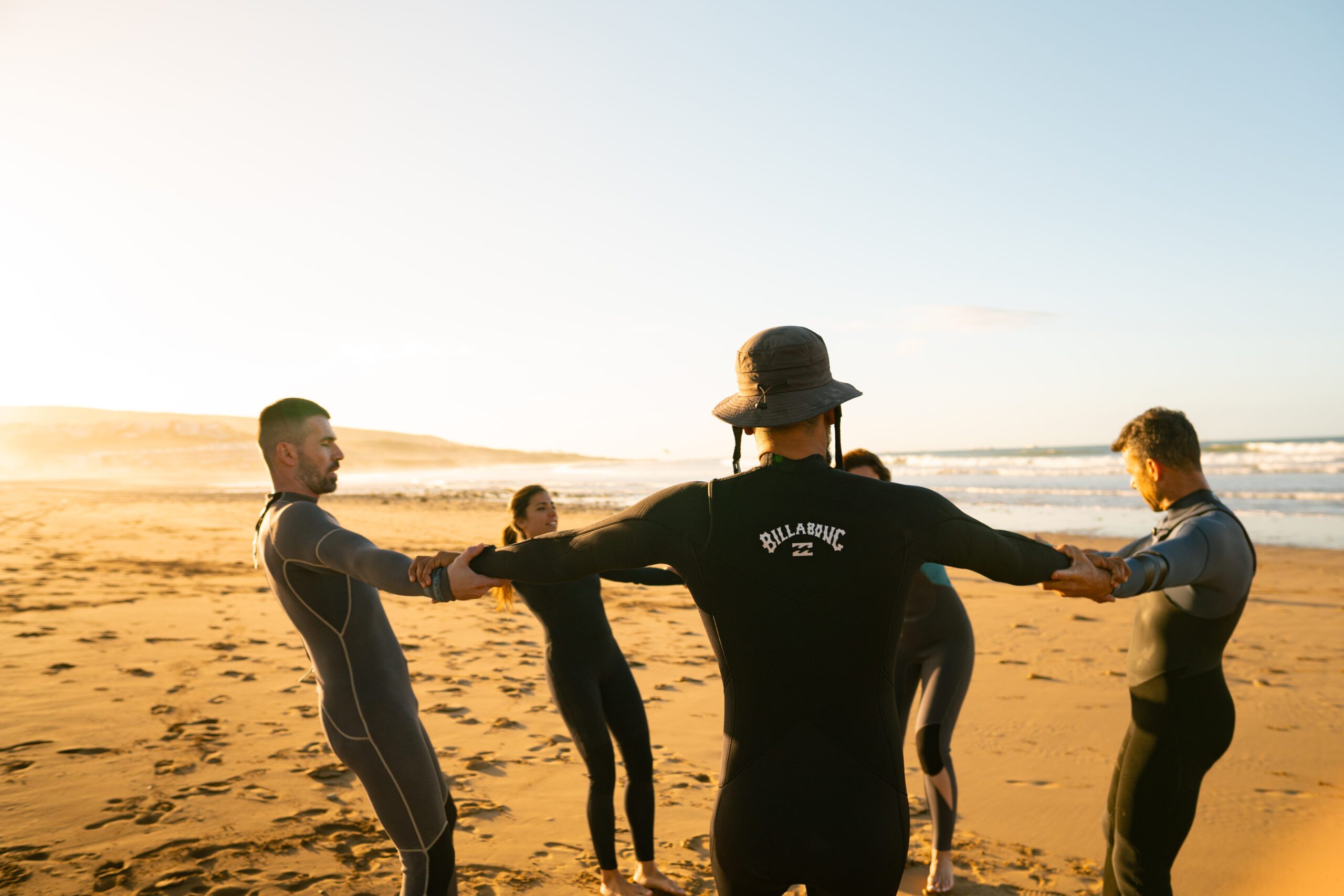
Your instructor will explain ocean safety, how to paddle, and most importantly – the pop-up technique. You’ll practice standing up on the board on dry land until it becomes muscle memory.
In the Whitewater (1-2 hours)
You’ll start in the whitewater (broken waves) close to shore. This is the safest, most forgiving environment to practice. Your instructor will be in the water with you, pushing you into waves and giving real-time feedback.
Your First Ride
Most beginners stand up and ride a wave within their first lesson! It might only be for a few seconds, but that feeling of gliding across the water is addictive.
How Long Does It Take to Learn Surfing in Morocco?
Here’s a realistic timeline:
Day 1-2
• Learn to paddle
• Catch whitewater
• Stand up (briefly)
Day 3-4
• Consistently standing up
• Riding whitewater confidently
Day 5-7
• Starting to catch small green (unbroken) waves
Week 2+
• Building confidence
• Longer rides
• Basic turning
Pro tip: A one-week surf camp is the minimum we recommend. You’ll progress much faster with consecutive days of practice than sporadic sessions over months.
What Waves Are Best for Beginners?
- ✔ Small & Gentle Waves (1-3ft / 30-90cm) – Perfect for practicing pop-ups and balance
- ✔ Slow-Breaking Waves – Give you enough time to catch, stand up, and ride
- ✔ Beach Breaks Over Sand – Safer than reef or rock breaks
- ✔ Consistent & Predictable Waves – Ideal for building confidence
- ✔ Minimal Currents – Less energy spent fighting rip currents
Top 10 Tips for Beginner Surfers in Morocco
- Don’t skip the warm-up – Surfing uses muscles you didn’t know you had
- Practice your pop-up daily – Do 10 pop-ups on land before each session
- Listen to your instructor – They know what works
- Be patient – Everyone falls. A lot. It’s part of the process
- Protect yourself from the sun – Zinc sunscreen is essential
- Stay hydrated – Surfing is more tiring than it looks
- Rest when needed – Overtraining leads to injuries
- Learn surf etiquette – Right of way rules matter
- Take photos/videos – You’ll want to remember this
- Have fun! – It’s not about perfection, it’s about the experience
Basic swimming ability is required – you should be comfortable in water over your head. You don’t need to be an Olympic swimmer, but you should be able to paddle and tread water. Lessons take place in shallow water where you can stand.
Absolutely not! We’ve taught complete beginners in their 50s and 60s. Surfing is for everyone. As long as you have reasonable fitness and balance, age is just a number.
With proper instruction, surfing is very safe for beginners. You’ll use soft-top boards (no sharp edges), surf in waist-deep water, and have an instructor watching at all times. The main risks are sunburn and tired muscles!
No! All equipment is provided at surf camps. We actually recommend not buying gear until you’ve surfed for at least a few weeks and know what style suits you.
Average fitness is fine for beginners. Surfing will make you fitter! That said, if you’re completely sedentary, doing some swimming or upper body exercises before your trip will help.
Learning to surf in Morocco is an unforgettable experience. The combination of perfect beginner waves, welcoming culture, and incredible value makes it the ideal destination for your first surf adventure.
At Wave Nomad Surf Camp, we specialize in taking complete beginners from zero to riding waves in just one week. Our experienced local coaches, small group sizes (max 6 students), and all-inclusive packages take the stress out of planning.
Ready to catch your first wave?
Book your beginner surf camp now!
Limited spots available – Book now to secure your place!